Allopathic medicine is the term traditionally used to describe conventional Western medicine the mainstream medical system practiced by physicians, hospitals, and many healthcare institutions today.
The term was coined by physician Samuel Huhnemann in early 1800s originally to distinguish conventional medicine treatments from homeopathy.
The word comes from the Greek roots:
Allows: Other of opposite.
Pathos: Suffering or disease 🦠
The basic philosophy is to treat disease using interventions that counteract, suppress, or address the symptoms or underlying causes of illness.
Examples of allopathic medicine
. Prescription medications, including antibiotics
. Surgery and medical procedures.
. Chemotherapy and radiation.
. Anti-inflammatory medications
. Hormone replacement therapies.
. Vaccinations.
. Emergency and intensive care.
Allopathic has its limitations. Some chronic conditions require more than symptom management. Nutrition, environment exposures, Lifestyle, and individual differences are important parts of healthcare.
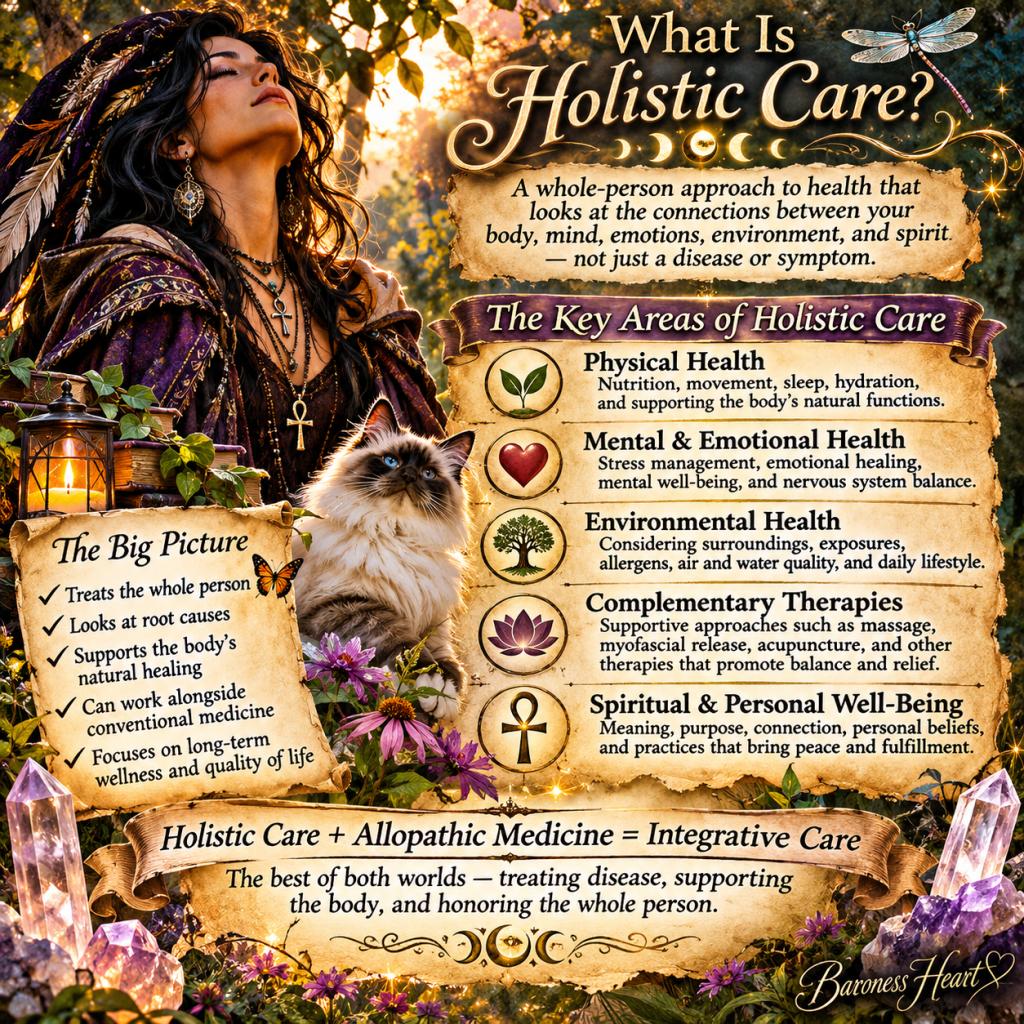
Holistic care is an approach to healthcare that looks at the whole person rather than treating an illness, symptom, or diagnosis in isolation.
The word holistic comes from the idea that all parts of a person are interconnected. Your physical body, emotional well-being, mental health, environment, nutrition, and lifestyle can all influence one another.
The philosophy is simple:
Don’t just treat the illness. Understand the person experiencing it.
The five areas of holistic care
1. Physical health
Nutrition, movement, sleep, hydration, pain management, and supporting the body’s physiological functions.
2. Mental and emotional health
Stress management, emotional healing, mental health support, mindfulness, and nervous system regulation.
3. Environmental health
Looking at environmental exposures, allergens, chemicals, air quality, water quality, and surroundings.
4. Complementary therapies
Depending on individual needs, this may include acupuncture, massage, myofascial release, physical therapy, and other supportive therapies.
5. Spiritual and personal well-being
Meaning, connection, purpose, personal beliefs, relationships, and practices that bring peace and fulfillment.
Holistic care vs. allopathic medicine
The two approaches don’t have to compete.
Allopathic medicine: Diagnoses and treats disease using conventional medical approaches.
Holistic care: Considers how the different aspects of someone’s life and health interact.
Integrative medicine: Combines appropriate conventional medical treatment with evidence-informed complementary approaches.
Why does holistic care matter with chronic illness?
Chronic conditions can be complicated. A person may have several overlapping issues that affect quality of life.
For example, someone dealing with chronic inflammation, pain, food sensitivities, or recurring infections may need more than one type of support.
A holistic approach might consider:
Underlying disease processes.
Immune system function.
Nutrition and nutritional deficiencies.
Environmental triggers.
Medication sensitivities and interactions.
Sleep and stress.
Pain and physical function.
Importantly, holistic care should not mean abandoning necessary medical treatment or assuming that every illness can be cured naturally.
One philosophy worth remembering
Treat the disease, support the body, respect the individual, and never stop looking at the bigger picture.
I believe one of the most important principles in healthcare is that patients deserve to be heard, involved in decisions, and treated as whole human beings rather than a collection of symptoms.
And that’s really the heart of holistic care. ❤️


Leave a Reply